Month: December 2008

Why doesn't government have reservists?

It starts here

The role of government is going to change.  As individuals find it easier to collaborate and solve problems, traditional government structures will need to be reshaped and rewired. So how do we start this change?

The people’s pilot light

I first found myself thinking of the role of government as a “pilot light” at a Department for Communities and Local Government event on digital inclusion. Most government bodies are prone to consider themselves as somehow permanent but what would they be like if they got their collective heads around being only sometimes on? The pilot light on the boiler that hums quietly away, then sparks into life when things get a bit chilly.

That, of course, is very Keynsian and at the moment government is turning itself to full roar and bunging on all 4 rings on the gas cooker in an attempt to get some heat back into the economy.

What is interesting though is how we habitually structure most government on an assumption of permanence.  That means that when we need more government we struggle to find the capacity and when we need less we are clumsy at shrinking, often reluctant to scale it back and put the excess capacity to useful work elsewhere.

32nd Birmingham and District Leisure and Tourism Light Foot (reserve)

This is why I think government needs reservists.  In the good times these people will be working happily in private industry, training a couple of weeks of the year with government oppos, creating links and bridges that wouldn’t otherwise exist, speeding up the modernisation of government by sharing new ideas and ways of working.

Of course social/private firms and the third sector already provide contractual spare capacity for government.  – I’m wondering if it makes sense to create some stronger culture of treating government as something that gets deployed where and when it is needed.

Rehydrate in case of emergency.

We need to create the core notion of government that grows and shrinks depending on the task in hand.  This habit will be key to responding to self organising citizens.  Why clean a street if the people who live there use some of their combined social capital to keep it clean for themselves? Often it’s simply because we planned to clean it, it’s our job – what are they doing cleaning it anyway!

This is not a complete answer, nor a wholly formed thought, so help me here please.  How do we re-structure government to respond to widespread self organising citizens?

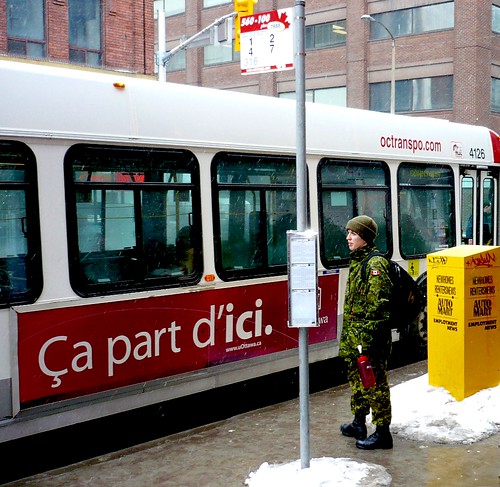
(image “It starts here” from Mikey G Ottowa.)

Twitpanto – one helluva social object.

A triumph darling.  Jon Bounds and catnip (with a huge host of help) amused the entire interwebs (well a bit of it) with the worlds first Twitter Panto. Besides creating the wordle above, Matthew Somerville pulled together the script and audience in one wonderful social thingy. Actors Online reckons it brought the house down (how often must they use that one?) and the whole caboodle got brum happy too.

Updates:

I Googled twitpanto at about 10pm December 23rd and found – for the first time in years – that there were no ads to accompany it. Twitpanto is a real thing that really happened but so far ahead of some long tail curve that not even mighty google knows where it fits. Surely a Christmas miracle.

Chris loved it because:

  • It was absolutely chaotic but it absolutely worked
  • The audience participation – it’s an important part of a panto and seeing over 50 tweets of ‘oh no it’s not’ and ‘oh yes it is’ come rolling in was fantastic
  • It was popular – not a penny was spent on promotion but it spread because people liked the idea. #twitpanto was the top trending topic on twitter and so far my tag search is showing over 1,300 uses of the tag (and they’re still coming)
  • Birthday boy Lloyd Davis appeared as himself (I’m sure he looked different in Brazil) and described what happened as “an anthropological treasure trove”. Nick Burcher also enthused:

    a great demonstration of the versatility of Twitter and really highlighted the difference between Twitter and more ‘traditional’ social networks like MySpace and Facebook (where it would have been difficult to re-create the immediacy of #twitpanto and would have been even harder to follow it!) A collaborative, non-sponsored effort, #twitpanto was a great example of how social media can facilitate an expansive conversation between like-minded individuals just for fun and just because……

    Tom Roper professes a liking for the vulgarity of panto and wasn’t disappointed to find twitpanto “rowdy, bawdy and sometimes hard to follow, just like the real thing”.

    Emma Jones (Dandini!) concludes:  “pantomime is such a great match for Twitter – it’s all about the instant feedback and audience participation!, echoed by Robert Anderson: “My first job after leaving university was in panto– Jack and the Beanstalk in York, if you must know. Many of the audience told me that they didn’t go to the theatre during the year but always went to the panto. Why? Because it was social, populist and they could get involved. Crucially they enjoyed the show and told their friends about it– retweeted, if you like. Could it be that the panto spirit sums up what two-way communication (ie the social bit) is all about?”